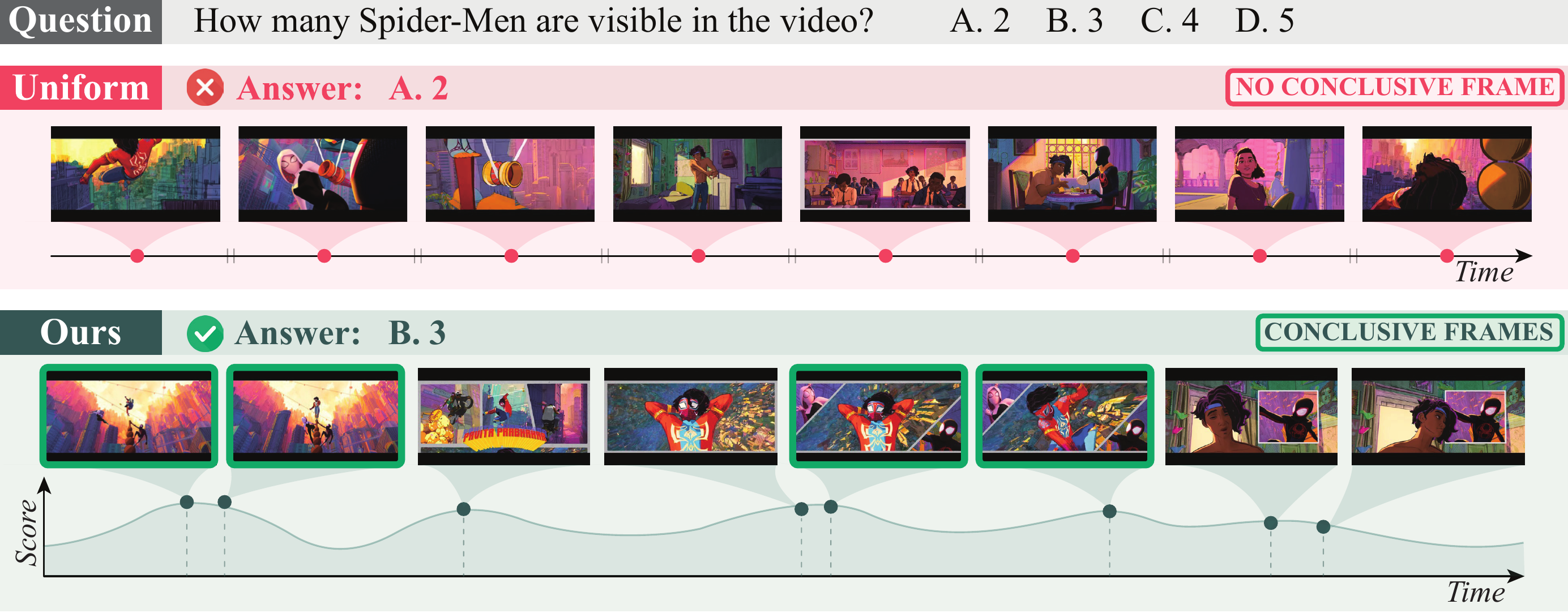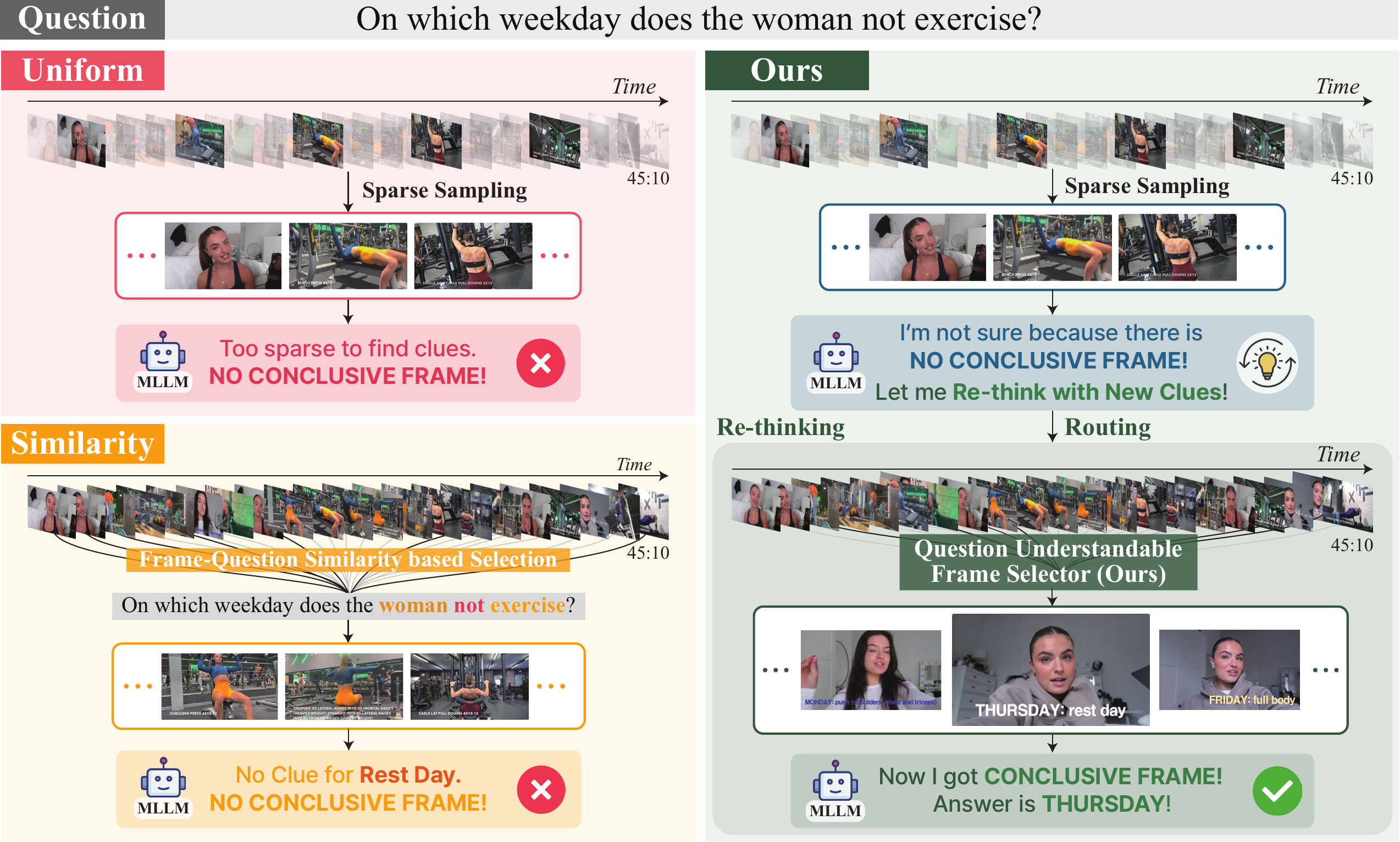
How can an MLLM find the few decisive frames hidden inside a long video? Our answer is ReQuest, a question-adaptive evidence-search framework that learns from an MLLM’s own responses. ReQuest first reasons over uniformly sampled frames, then selectively re-thinks uncertain cases using a lightweight evidence selector and uncertainty-adaptive frame sampling.
The resulting framework improves long-form video QA across multiple benchmarks and MLLM backbones—without modifying or fine-tuning the underlying answer model.
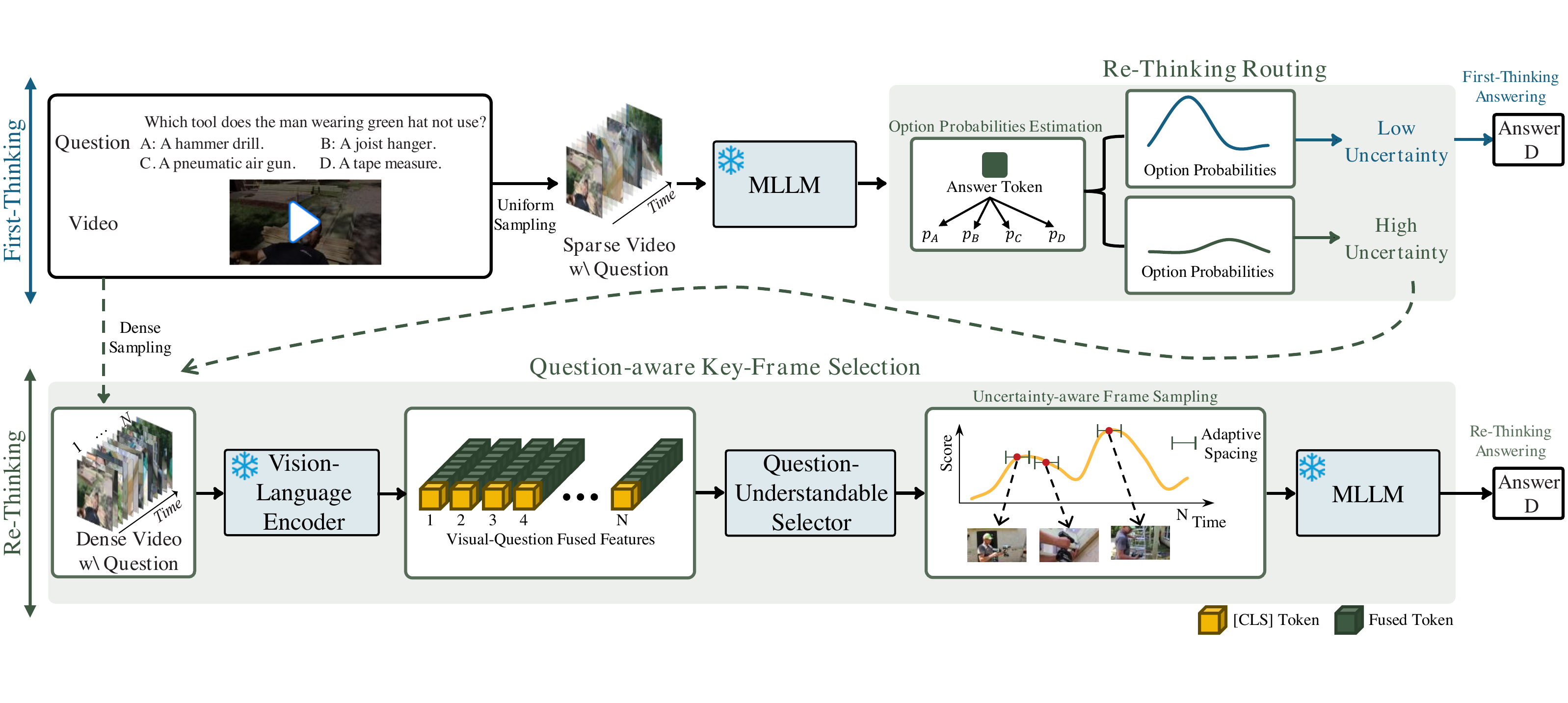
ReQuest first performs First Thinking with uniformly sampled frames. If the MLLM is confident, it directly answers the question. If the prediction is uncertain, ReQuest activates a Re-thinking stage, where a lightweight question-aware selector localizes informative frames across the video. The selected frames are then fed back into the MLLM for refined reasoning.
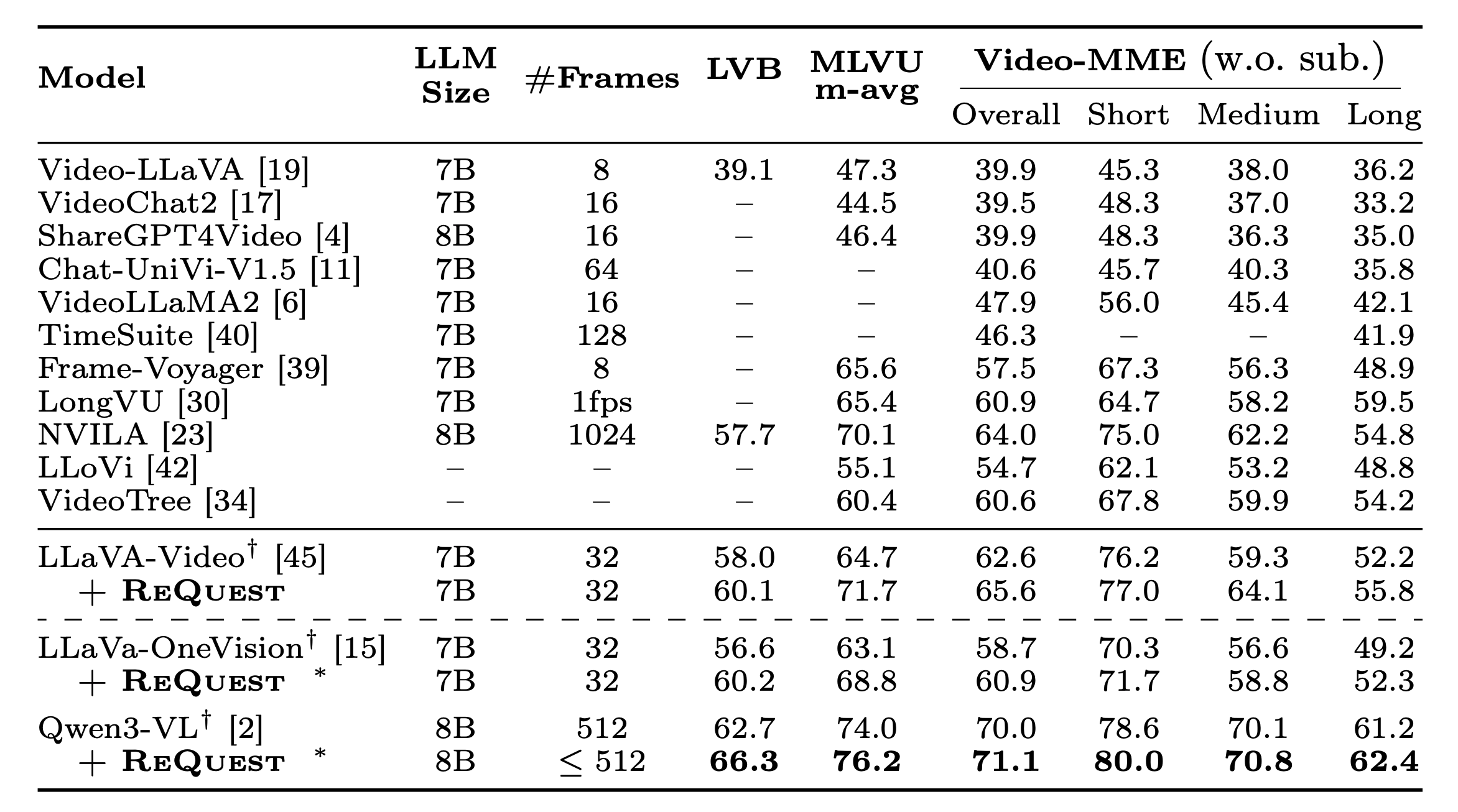
ReQuest consistently improves long-form Video QA performance across multiple benchmarks and backbones, including LLaVA-Video, LLaVA-OneVision, and Qwen3-VL.
Uniform sampling may miss decisive evidence frames in long videos. ReQuest identifies question-relevant moments and provides the MLLM with more informative visual evidence for answering.